Course Menu
-
Introduction
Course Outline
System Development
Understanding Fear Paralysis Reflex
Understanding Moro Reflex
Understanding Rooting Reflex
Understanding Babinski Reflex
Understanding Palmer Reflex
Understanding Spinal Galant Reflex
Understanding Tonic Labyrinthine Reflex (TLR)
Understanding Symmetrical Tonic Neck Reflex (STNR)
Understanding Asymmetrical Tonic Neck Reflex (ATNR)
-
Phase 1 Overview
Rhythmic Movement Training
Rooting Reflex Exercise
Palmar Reflex Exercise
Babinski Reflex Exercise
Spinal Galant Reflex Exercise
Moro Reflex Exercise
Optokinetic Reflex
Astronaut Training Slow
Wilbarger Brushing
Box Breathing
Hand Pulls
Meatball
Smooth Pursuits
Supine Rocking
1/2 Superman
Snow Angel
Balanced Brain ~ Thriving Child
Kim Lowack
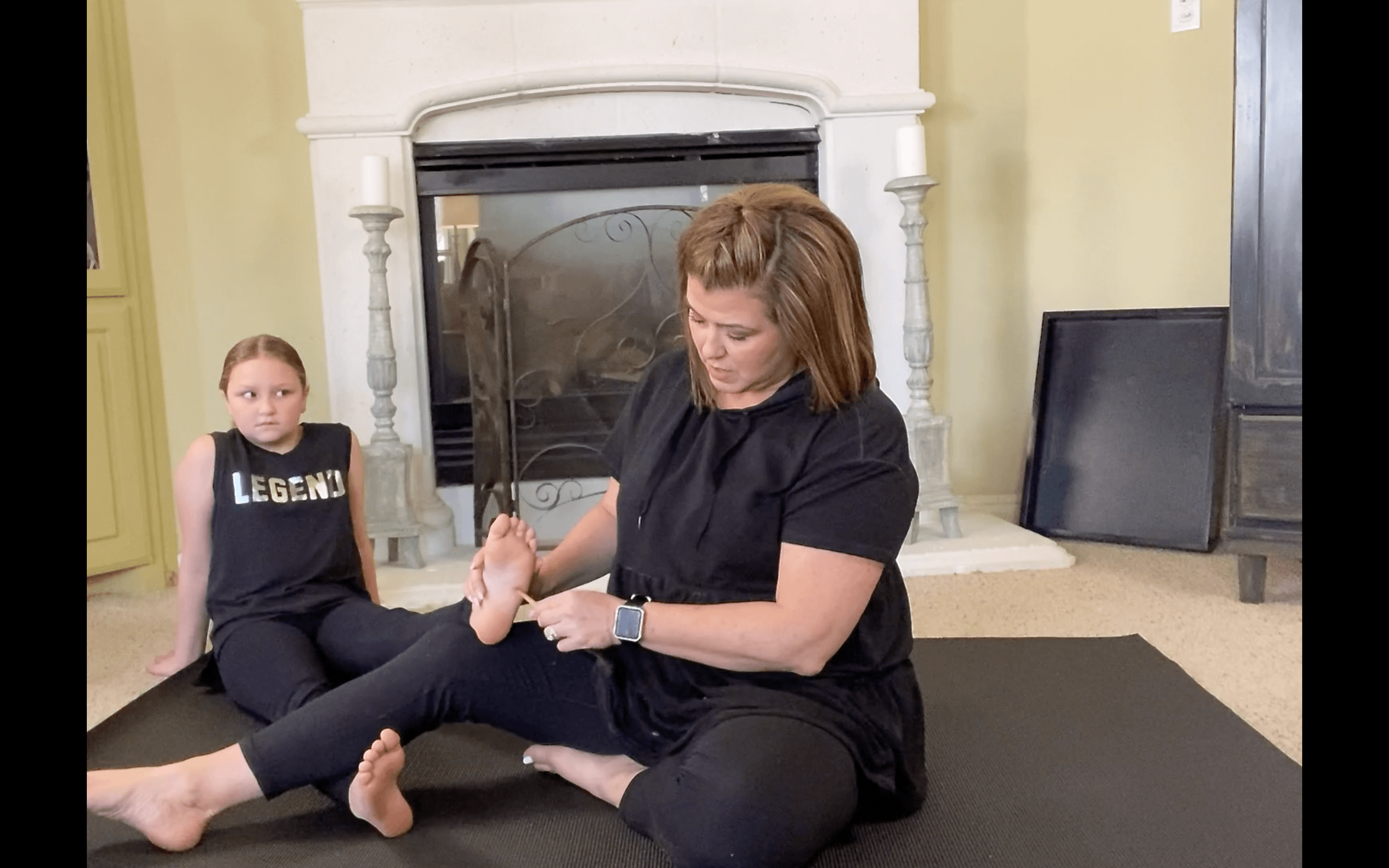
Babinski Reflex Training
-
Equipment: Stick-end of the paintbrush
alternate tool: end of a knitting needle or crochet hook
Technique: Quick strokes to the outer edge of the foot - such as you would strike a match- going from the heel UP to the base of the pinky toe with deep pressure, you want the flesh to indent as you stroke
Frequency:
- 1-2 x daily
- R brain weakness: 10 quick X strokes on the Right foot and 20 on the Left foot
- L brain weakness: 10 X strokes on the Left foot and 20 on the Right foot
- Global Delay - begin with R brain protocol above (we will discuss when and if you move to the left side)
Positive reactions:
- extension or flaring backward of the toes
- twitching or reactions of the whole foot
- pulling away of the entire leg
- emotional reactions such as anger or tears
Scoring:
- 4: more than 75% of strokes react
- 3: 50-75% react
- 2: 25-50% react
- 1: less than 25% react
- 0: zero reaction to strokes = INTEGRATION
Integration has occurred when you get zero reactions during all brush strokes