Course Menu
-
Introduction
Course Outline
System Development
Understanding Fear Paralysis Reflex
Understanding Moro Reflex
Understanding Rooting Reflex
Understanding Babinski Reflex
Understanding Palmer Reflex
Understanding Spinal Galant Reflex
Understanding Tonic Labyrinthine Reflex (TLR)
Understanding Symmetrical Tonic Neck Reflex (STNR)
Understanding Asymmetrical Tonic Neck Reflex (ATNR)
-
Phase 1 Overview
Rhythmic Movement Training
Rooting Reflex Exercise
Palmar Reflex Exercise
Babinski Reflex Exercise
Spinal Galant Reflex Exercise
Moro Reflex Exercise
Optokinetic Reflex
Astronaut Training Slow
Wilbarger Brushing
Box Breathing
Hand Pulls
Meatball
Smooth Pursuits
Supine Rocking
1/2 Superman
Snow Angel
Balanced Brain ~ Thriving Child
Kim Lowack
Brushing Protocol
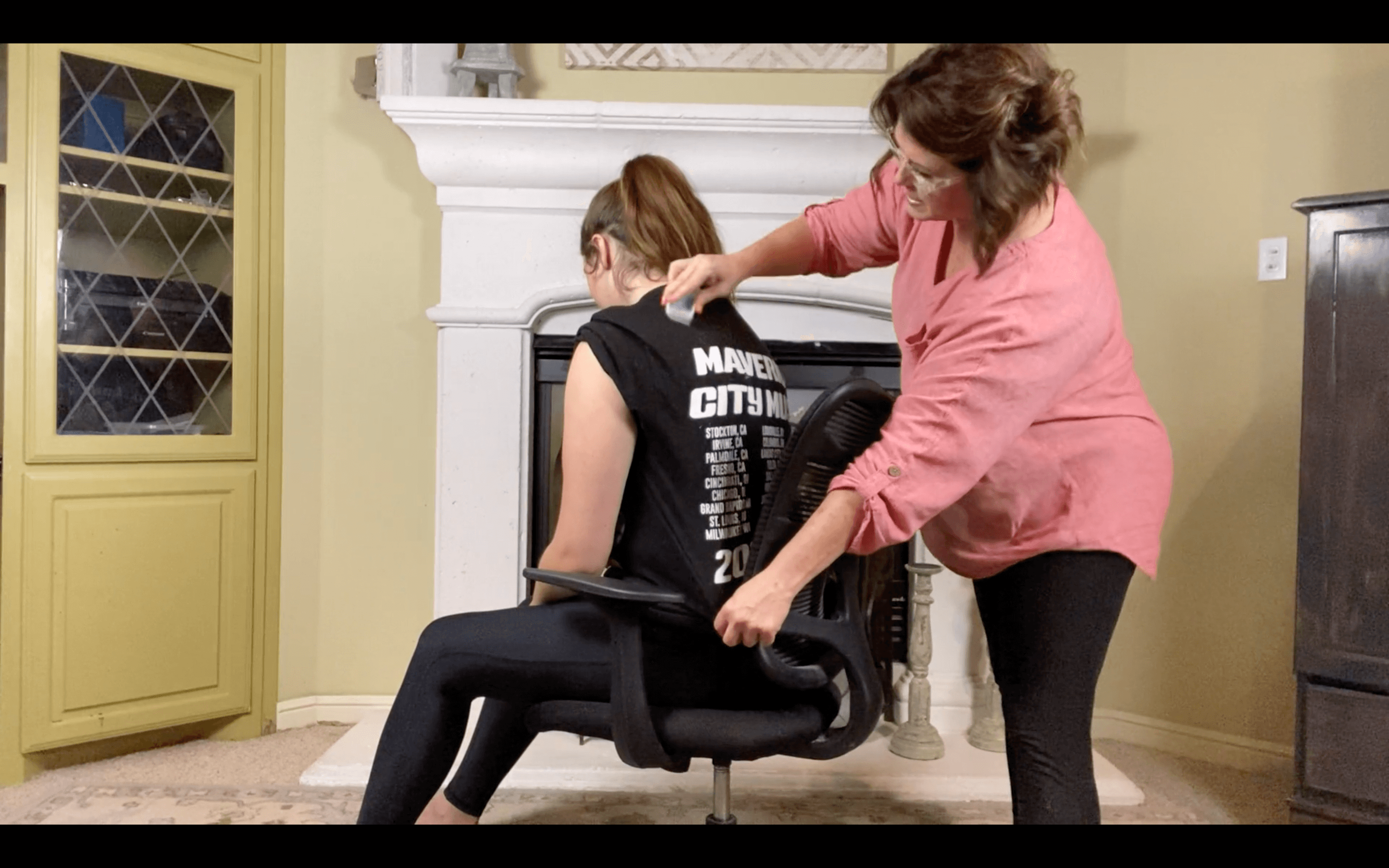
This technique is based on The Wilbarger Deep Pressure and Proprioceptive Technique. It uses a specific type of brush and gentle joint compression to send information to the brain in an organized fashion. It primes the brain to receive and organize information in an effective and useful way.
You will use 1-3 x a day as needed for system organization and calming.
You MUST use the brushing (for activation of the nervous system) and compressions (calming of the nervous system) together to teach the nervous system how to regulate itself.
Consistency is the critical factor.
However, the technique can be used as needed between activities, or to reduce overwhelmed reactions and reorganize the nervous system after an emotional upset.
Joint compressions can also be done by the child by doing jumping and wall pushups.
Brushing can be done in an upward and downward direction.
During the initial few sessions, a child may react with crying or other avoidance measures because it is new, and the re-organizing can be disquieting. After a few sessions, this will typically become pleasurable and the child will often ask for it or do it themselves.
- Can improve the child's ability to transition between activities (ie calming after an emotional outburst, improving tolerance levels)
- Can help the child who has discomfort in being touched (tactile defensiveness)
- Can increase the child's self-regulation, self-calming
- Can increase the ability of the nervous system to use information from the senses more effectively
- Can improve attention and focus
- Children usually like the protocol
You will get familiar with the technique and move it into an as-needed basis, you can move forward with other exercises once you have this routine established.