Course Menu
-
Introduction
Course Outline
System Development
Understanding Fear Paralysis Reflex
Understanding Moro Reflex
Understanding Rooting Reflex
Understanding Babinski Reflex
Understanding Palmer Reflex
Understanding Spinal Galant Reflex
Understanding Tonic Labyrinthine Reflex (TLR)
Understanding Symmetrical Tonic Neck Reflex (STNR)
Understanding Asymmetrical Tonic Neck Reflex (ATNR)
-
Phase 1 Overview
Rhythmic Movement Training
Rooting Reflex Exercise
Palmar Reflex Exercise
Babinski Reflex Exercise
Spinal Galant Reflex Exercise
Moro Reflex Exercise
Optokinetic Reflex
Astronaut Training Slow
Wilbarger Brushing
Box Breathing
Hand Pulls
Meatball
Smooth Pursuits
Supine Rocking
1/2 Superman
Snow Angel
BALANCED BRAIN ~ THRIVING CHILD
Kim Lowack
Astronaut Training- Fast
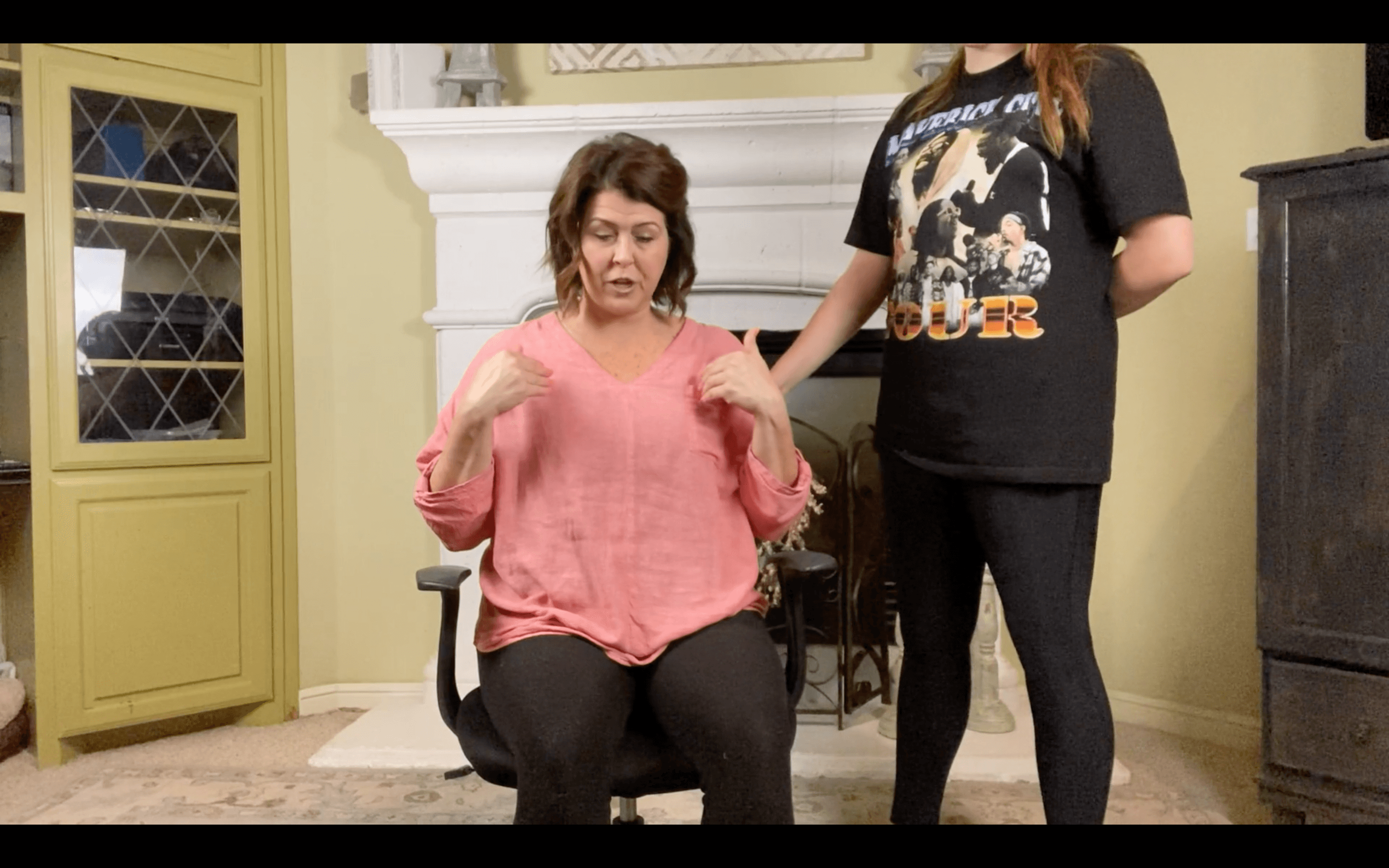
Astronaut Training is a precise, powerful, therapeutic protocol that is designed to develop optimal vestibular function, an essential foundation for all sensory processing, auditory processing, and movement control.
Equipment: spinning chair with a backrest and armrests
Technique:
You will have your child sitting in a chair - looking down at their knees. Rotate the chair at a rate of 1 rotation per 2 seconds.
- Rotate the chair for 10 rotations - noting which direction you are turning (ie clockwise/counterclockwise)
- After the 10 rotations stop them and ask them to look at you, watch their eyes to see if they have post-rotary nystagmus - your goal is 10 seconds of eye movement.
- Ask them if they are nauseous or still dizzy after 10 seconds have passed. If they are give them more time to recover or have them get up and jump or crash onto something soft- this will calm the system more quickly
- When they are ready, rotate them in the same position in the opposite direction for 10 rotations.
- Again, watching for the post rotary nystagmus
- Make a note if the eyes are moving in a coordinated manner from side to side, if they are not we will continue this activity until we get coordinated movements. If there is no nystagmus you will continue until you do get a response.
- The nystagmus should be cleared from the eyes within 10-15 seconds after rotation.
Frequency:
- 1-2 x daily
- 1 x per side
Undesired Reactions:
- eyes do not move side to side at all
- eyes have a rotational pattern to their movement
- very tiny - almost undetectable movements
- falling out of the chair
- feeling nauseous
- feeling like the room is moving side to side or in reverse
- the emotional reaction of anger or tears or shutting down
Scoring:
- 10 seconds or greater of nystagmus eye movement, indicates the vestibular functions are within normal limits
- less than 10 seconds of nystagmus eye movement means you will continue this exercise until your numbers come up to a 10-15
- Any rotational (torsional) eye movement is abnormal no matter how long it lasts, continue with this exercise until the eye movement returns to a horizontal movement.
Healthy Vestibular Function: occurs when the post rotary nystagmus has a normal side-to-side movement that lasts 10-15 seconds with zero nausea